AI Agents as Financial Educators in Underbanked Regions

February 4, 2026
Bridging the Knowledge Gap Where Traditional Banking Can't Reach
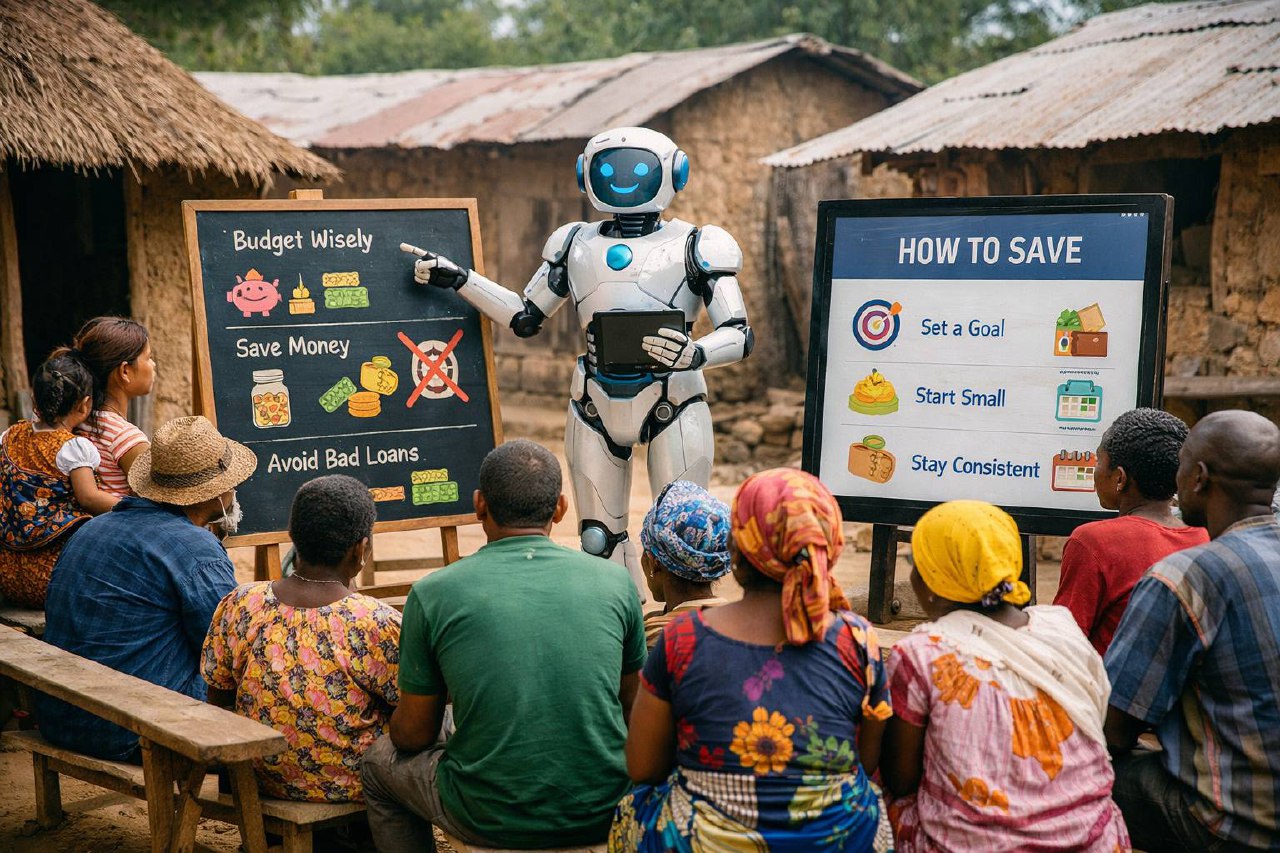
In many underbanked regions, access to financial education is just as limited as access to financial services themselves. Millions of people operate outside formal banking systems, relying on cash, informal savings groups, or fragmented mobile money tools without a clear understanding of interest rates, credit risk, budgeting, or long-term wealth planning. This lack of financial literacy quietly reinforces poverty cycles. AI agents are emerging as a powerful solution to break that loop.
AI agents can act as always-available financial educators, delivering simple, localized, and practical guidance through mobile phones—the most widespread piece of technology in underbanked communities. Unlike traditional financial institutions that require physical branches, paperwork, or minimum balances, AI agents meet users where they already are: on messaging apps, USSD interfaces, and low-bandwidth platforms. This drastically lowers the barrier to entry for learning basic financial concepts.
What makes AI agents especially effective is personalization. They can adapt explanations to a user's income level, spending habits, language, and cultural context. Instead of generic advice, users receive tailored guidance on saving, managing irregular income, understanding fees, avoiding predatory lending, or using digital wallets safely. Over time, these agents can help users build healthy financial behaviors through small, consistent nudges rather than overwhelming lessons.
AI agents also scale in ways human educators cannot. One well-designed agent can support millions of users simultaneously, at a fraction of the cost of traditional programs. This makes them attractive for NGOs, fintechs, and governments aiming to improve financial inclusion without massive infrastructure investments. When combined with mobile payments and stablecoin systems, AI education can directly translate knowledge into action—turning learning into real economic participation.
Ultimately, AI agents as financial educators are not about replacing human institutions, but about filling a critical gap. By empowering individuals with knowledge, clarity, and confidence, they lay the foundation for stronger local economies and more inclusive financial systems. In underbanked regions, education is the first form of capital—and AI agents are making it accessible at scale.
Sponsor this post
$0.00 earned
Support this free content. 90% goes to the author, 10% to the protocol.